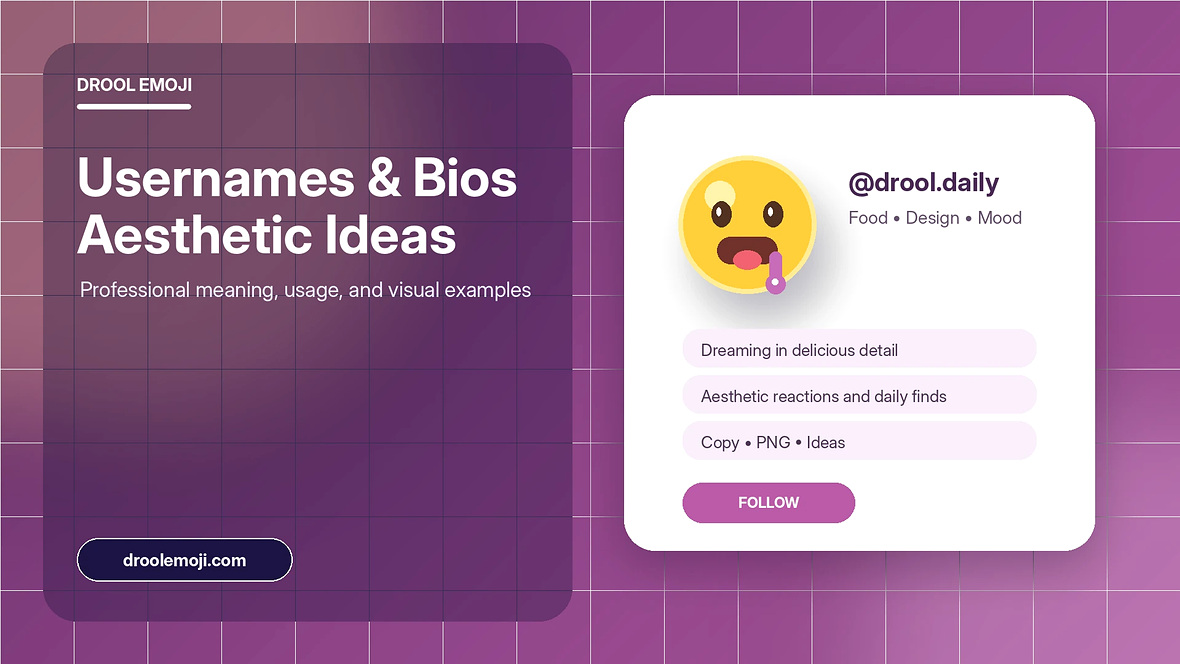
Use the drooling face thoughtfully in usernames, bios, captions, and aesthetic text layouts. This article gives practical context, clear examples, and responsible usage advice for everyday messages, social posts, websites, and design work.
Quick emoji tool
Copy the character as text or create a transparent PNG directly in your browser.
Using the character in usernames
The drooling face can create a playful username when the surrounding words already explain the theme, such as food, gaming, travel, or humor. Keep the name easy to read and confirm that the platform accepts supplementary Unicode characters.
Some services count emoji differently in character limits or remove them during registration. Save a plain-text alternative so people can still search for the account.
Bio and caption ideas
In a bio, one well-placed character can separate interests or emphasize a favorite topic. It can follow a short phrase about desserts, restaurants, design, cars, gaming setups, or dream destinations. In captions, it works best after the descriptive sentence rather than replacing the sentence entirely.
Aesthetic combinations often use sparkles, hearts, stars, or a matching subject symbol. Limit the number of decorations so the text remains readable and meaningful.
Tone, audience, and professionalism
The character is informal. It fits personal profiles, entertainment pages, food accounts, and playful creator brands, but it may not suit a legal, medical, financial, or formal business identity.
When the profile represents an organization, compare the symbol with the brand voice and audience expectations. A food brand may use it naturally, while a professional consultancy may prefer a subtler reaction.
Accessibility and discoverability
Emoji can be announced by screen readers and may not contribute useful searchable words. Put important interests, services, and location details in text. Treat the symbol as decoration or emotional emphasis rather than the only source of meaning.
Test the bio on mobile and desktop because line wrapping, font design, and character width can change. A simple arrangement usually survives these differences better than complex text art.
Practical username patterns
A readable pattern combines a short word with one emoji at the beginning or end. Food accounts can pair a cuisine or dessert term with the face. Gaming or technology profiles can use it as a reaction to a setup theme. Avoid placing several symbols between every letter, because that makes the name difficult to type and share.
Check spoken readability as well. People may need to tell someone the username aloud, and an emoji-heavy name can be hard to communicate without a direct link.
Aesthetic layout ideas
In bios, use line breaks to separate a short identity statement, interests, and a call to action. The drooling face can highlight one interest, while sparkles or a heart can provide a consistent pastel theme. Keep decorative symbols secondary to the actual information.
For captions, place the character after the strongest descriptive phrase. In a profile image or story graphic, generate a transparent PNG and combine it with shapes or text in a design tool.
Avoiding platform and search problems
Some platforms normalize usernames, reject emoji, or allow symbols only in the display name. Test availability before designing a whole brand around one character. Keep a plain handle that remains easy to search, mention, and type.
Search engines and assistive tools rely on words. Include relevant text such as food, travel, gaming, or design so the profile can be understood even when the emoji is not rendered.
Practical summary
The most useful approach is to match the drooling face to a clear context, keep the message readable, and choose text or PNG based on the destination. Text is searchable and accessible, while a PNG gives visual control in design work.