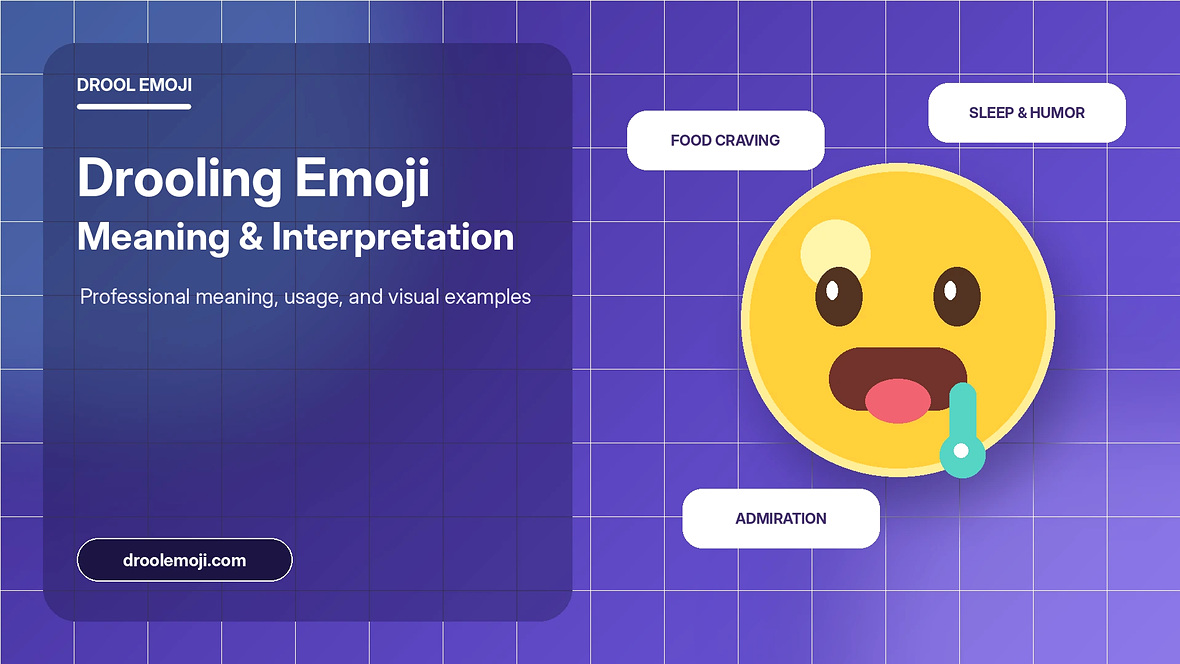
Understand what the drooling face communicates in food, attraction, sleep, humor, and casual online conversations. This article gives practical context, clear examples, and responsible usage advice for everyday messages, social posts, websites, and design work.
Quick emoji tool
Copy the character as text or create a transparent PNG directly in your browser.
The core meaning of the drooling face
The drooling face is a visual shorthand for desire that feels almost physical. The open mouth, relaxed eyes, and visible drop make the reaction stronger than a simple happy face. In everyday messages, people use it when food looks excellent, a product feels irresistible, a person looks attractive, or a dream experience seems especially appealing.
Because the expression is exaggerated, it also works well in jokes. A friend may use it under a photograph of pizza, a new gaming setup, a beach destination, or a luxury car without literally describing hunger. The symbol communicates an instant reaction before a longer explanation is needed.
Food, attraction, and admiration
Food is the clearest and safest interpretation. When the character follows a meal photo, recipe, restaurant recommendation, or dessert video, it means “that looks delicious” or “I want that.” Pairing it with a food symbol makes the message even more precise.
When it refers to a person, the meaning can become flirtatious or suggestive. That use depends heavily on relationship, culture, and tone. In public comments or professional spaces, a neutral compliment is often more appropriate. For products, fashion, design, technology, and travel, it usually means strong admiration rather than literal appetite.
Sleep and comic exaggeration
Drooling is also associated with deep sleep. A sleeping face, bed symbol, or tired message can make the character mean that someone slept heavily. This interpretation is common in bedtime jokes and casual family or friend chats.
Meme use is intentionally dramatic. The face may appear beside something ordinary to make the reaction funny. Repetition, capitalization, or extra symbols can amplify the effect, but a single character is normally enough.
How context changes the interpretation
The surrounding words, symbols, and relationship between senders determine the final meaning. A food photograph makes appetite obvious. A heart creates affection. A fire symbol adds intensity. A shopping bag points to a wishlist, while a sleeping symbol shifts the interpretation toward rest.
Before sending it, consider whether the audience understands the playful tone. It works best in informal contexts, and it can be misunderstood when the subject is sensitive or the relationship is distant.
Common examples in everyday messages
A simple food message might say that a fresh pizza looks irresistible, followed by the drooling face. In a shopping conversation, the same character can follow a link to a wanted pair of shoes or a new phone. In a travel chat, it may react to a beach photograph or hotel view. These examples all share one idea: the sender strongly wants, admires, or anticipates what is shown.
The symbol also appears in short replies where a full sentence would feel unnecessary. A friend sends a photograph of dessert, and the receiver answers with the face alone. That works because the subject is already visible. When the subject is not obvious, adding a noun or a second emoji prevents the reply from sounding vague.
Potential misunderstandings to avoid
A reaction about a person can be read as flirtation, objectification, or an overly intimate comment. Even when the sender intends a harmless compliment, the receiver may not share that interpretation. Public comments require more care than private messages between close friends.
The face can also seem sarcastic when it follows an ordinary or unappealing item. That may be intentional in a meme, but it can confuse readers who do not know the joke. Words such as 'actually looks great' or a clear food symbol can make the intended tone easier to understand.
A respectful usage checklist
Use the character when the context is informal, the subject is clear, and the audience is likely to understand the exaggeration. Prefer food, products, travel, entertainment, and harmless wishlist topics when you are uncertain about tone.
Keep accessibility in mind. A screen reader may announce the Unicode name, so repeated rows of the same face can become noisy. One symbol with a clear sentence usually communicates more effectively than a long decorative string.
Practical summary
The most useful approach is to match the drooling face to a clear context, keep the message readable, and choose text or PNG based on the destination. Text is searchable and accessible, while a PNG gives visual control in design work.